

Sarvapitra Amavasya Remedy Explained: Rahu, Ketu, Ancestors & Tarpan Kriya for Karmic Healing, Peace and Transformation
Introduction
Sarvapitra Amavasya is not just a ritualistic day.
It is:
A karmic gateway to connect with your ancestors (Pitris) and release unresolved patterns stored within your life.
In Vedic astrology:
- Rahu → Paternal lineage
- Ketu → Maternal lineage
These are not just planets.
They are karmic storage points of ancestral energy.
What is Tarpan? The True Meaning
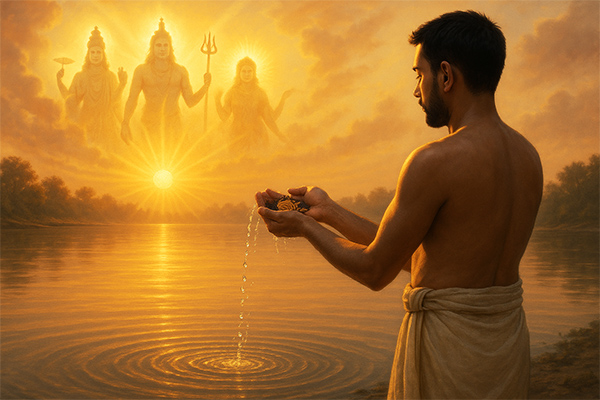
Traditionally, Tarpan involves:
- Offering water (Gangajal or river water)
- Using black sesame (Til)
- Wearing a ring of Durva grass
But the deeper meaning is:
Assurance to your ancestors that their unfinished karma will be completed.
Simple Analogy
When a mother leaves home:
- She gives instructions
- She seeks assurance
When you say:
👉 “Don’t worry, I will take care”
She leaves peacefully.
👉 This is exactly what Tarpan does.
The Spiritual Science Behind Tarpan
When you perform Tarpan:
- You release ancestral anxiety
- You accept karmic responsibility
- You allow their journey to continue
Scriptural Insight
“पितृदेवो भव”
👉 “Honor your ancestors as divine.”
Rahu–Ketu Axis: The Ancestral Blueprint
Rahu and Ketu represent:
- Family patterns
- Unresolved karmas
- Generational behaviors
Key Understanding
You are not separate from your ancestors.
You are their continuation.
How to Identify Ancestral Patterns
Even without astrology:
- Observe family history
- Identify repeating patterns
- Notice emotional themes
Examples:
- Relationship failures
- Property disputes
- Emotional abandonment
- Social conflicts
The Deeper Problem: Unresolved Karma
When ancestors leave with:
- Unfulfilled desires
- Emotional pain
- Incomplete duties
👉 These patterns continue in descendants.
Case Study: Ketu in Cancer (6th House)
This combination revealed:
- Maternal lineage conflict
- Relationship distortions
- Emotional instability
Real-Life Pattern
- Family separation
- Social rejection
- Relationship complications
The Mirror Effect
What ancestors experience:
👉 Repeats in your life
Example
- Uncle rejected → native rejected
- Broken marriage → repeated patterns
The Root Cause: Grudge & Resistance
The biggest blockage is:
Holding on to resentment
The Remedy: Letting Go (True Tarpan)
You don’t need:
- Complex rituals
- Perfect mantras
You need:
👉 Emotional release
Practical Tarpan Method (Simple & Powerful)
Step 1: Sit in a clean place
Step 2: Hold:
- Flower
- Fruit
- Leaf
Step 3: Close your eyes and say:
“I forgive you all from my heart.
I release all grudges and accept your journey.”
Step 4: Promise:
- To complete unfinished karma
- To live consciously
Step 5: Offer the item to nature or donate
The Emotional Release
While doing this:
- You may cry
- You may feel heavy
👉 This is not weakness.
It is:
Release of stored karmic pain
The Rahu–Ketu Nature
Rahu & Ketu behave like:
- Rule breakers
- Pattern disruptors
Psychological Insight
People with strong Rahu–Ketu:
- Challenge norms
- Break boundaries
- Create unconventional paths
The Core Lesson
Do not judge:
- Your ancestors
- Their actions
Because:
Every soul has its own journey.
Powerful Ketu Mantra
“अहम् ब्रह्मास्मि”
👉 “I am the divine consciousness.”
Chanting this:
- Disconnects from ego
- Aligns with higher self
- Heals ancestral karma
Additional Remedy
- Donate food (milk, fruits, wheat, sugar)
- Plant a tree (or visualize planting)
The Result of Tarpan
When done sincerely:
- Mental peace increases
- Life clarity improves
- Blockages start dissolving
Real Transformation
In the shared case:
- Business revived
- Relationships improved
- Inner peace achieved
👉 Why?
Because:
Vision returned.
The Real Problem of Rahu–Ketu
It is not suffering.
It is:
Lack of direction
Final Insight
Tarpan is not about ritual.
It is about:
- Forgiveness
- Acceptance
- Responsibility
Conclusion
This Sarvapitra Amavasya:
- Let go of grudges
- Heal your lineage
- Align your karma

Because:
When ancestors are at peace,
Your life naturally moves forward.
📚 DETAILED REFERENCES
1. Brihat Parashara Hora Shastra (BPHS)
- Rahu–Ketu as karmic indicators
- Ancestral influences
2. Garuda Purana
- Pitru loka and ancestral journey
3. Jataka Parijata
- Karmic inheritance in charts
4. Upanishads
- “Aham Brahmasmi” → Self-realization
5. Jyotish Framework
- Rahu → Paternal karma
- Ketu → Maternal karma
- Moon → Emotional memory