
Pending Karma in Astrology: Decoding Ancestral Debts, Soul Agreements, and Atmakaraka Clues Through Rashi and Divisional Charts
Introduction: Understanding the Concept of Pending Karma
Pending karma is considered one of the most layered and complex subjects within predictive astrology. When astrologers begin examining charts consistently, a pattern gradually emerges—human nature, life-defining events, relationships, separations, and recurring struggles rarely occur randomly. Instead, they appear linked to unfinished karmic agreements carried forward by the native as well as ancestral lineages.
Both major milestones and seemingly minor incidents form part of this karmic continuum. Some karmas manifest as responsibilities, others as debts to be repaid, and a few as blessings received from past efforts.
This framework helps astrologers identify the primary life arenas where an individual must invest effort, offer service, resolve ancestral imbalances, or receive support.
Primary Indicators of Karmic Work in a Horoscope
1. Role of the Lagna Lord
The Lagna Lord represents the conscious direction of effort. It shows where the native will willingly invest energy, take initiative, and shape destiny through personal action.
This planet reflects karmas the soul chooses to engage with actively—areas where growth is intentional rather than forced.
2. Role of the Sixth Lord
The Sixth Lord traditionally signifies debts, obligations, and karmic repayments.
Its placement can indicate:
-
Areas where service must be rendered
-
Situations demanding humility
-
Health or conflict-based karmic corrections
-
Repetitive struggles requiring resolution
When the Sixth Lord is retrograde yet strong or well-placed, interpretations may shift. In such cases, the native may receive assistance instead of only repaying debts—others may step forward to fulfill obligations toward the native.
Conversely, difficult placements can manifest as forceful karmic extraction—loss, disputes, or health drains.
Atmakaraka: The Soul’s Karmic Compass
Jaimini astrology gives profound importance to the Atmakaraka—the planet holding the highest degree in the natal chart. Classical teachings advise examining this planet not only in the Rashi chart but also across divisional charts to decode deeper soul contracts.
The Atmakaraka reflects:
-
Core soul lessons
-
Pending karmic obligations
-
Innate psychological drives
-
Evolutionary direction of the incarnation
When studied in Navamsa and other Vargas, it reveals how karmas unfold across different life domains.
Using Char Karakas to Decode Life Themes
Char Karakas modify karmic expression. Their conjunctions and placements refine predictions significantly.
Below are illustrative interpretative frameworks:
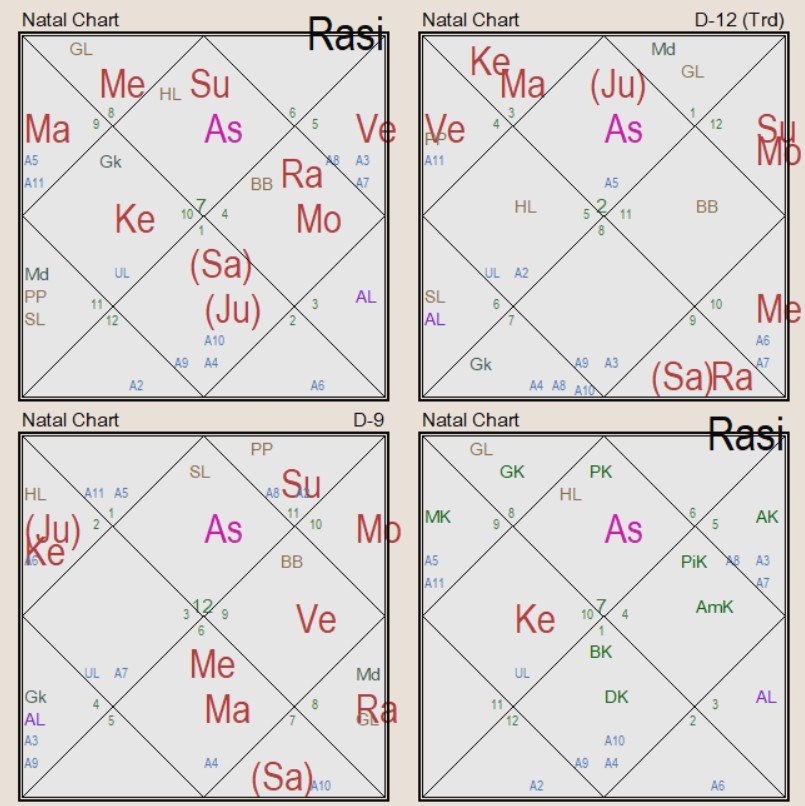
Example 1: Venus Atmakaraka in the Fourth House
When Venus acts as Atmakaraka in the sign of Putrakaraka within the Fourth House, karmic themes may revolve around:
-
Emotional nourishment of the masses
-
Teaching, writing, or guiding through transformative knowledge
-
Creating psychological or spiritual shelter for others
Such combinations often indicate karmic duties linked to collective healing through communication or wisdom traditions.
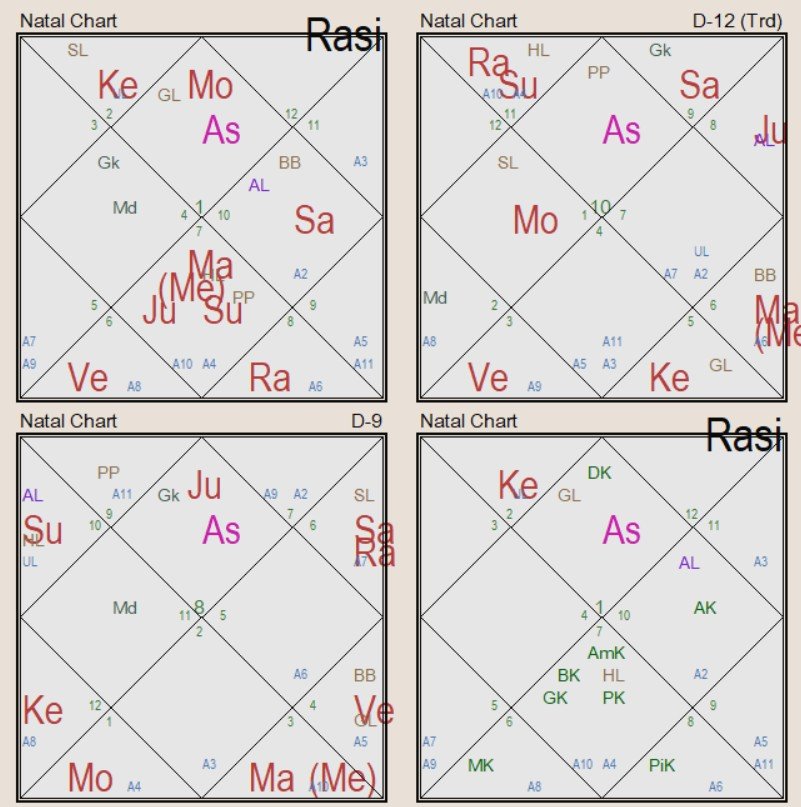
Example 2: Moon Atmakaraka in the Seventh House (Capricorn)
When the Moon functions as Atmakaraka while also linking to Pitri Karaka themes:
-
Service toward public welfare may dominate life direction
-
Work connected to healthcare, nourishment, or social support may arise
-
Emotional responsibility toward society becomes karmic duty
Example 3: Sun Atmakaraka in the Seventh House with Moon Influence
This configuration may produce karmic obligations emerging strongly after marriage, such as:
-
Responsibility toward spouse’s family
-
Caring for dependents with emotional or psychological needs
-
Sacrifices made for relational duty rather than personal ambition
How Planetary Conjunctions Alter Karma
No Atmakaraka operates in isolation. Conjunctions reshape karmic narratives completely.
For instance:
-
Mars Atmakaraka → Karma toward siblings, courage, health, protection
-
Mars + Mercury influence → Resolving disputes of relatives, problem-solving duties
-
Mars + Moon influence → Emotional healing through action, property or family protection
Thus, every added planetary layer modifies the karmic script.
Importance of Aspects and Holistic Chart Reading
Both Graha aspects and Rashi aspects must be evaluated. Pending karma cannot be judged through single-factor analysis.
Astrologers must observe:
-
Sign influences
-
Planetary dignity
-
Conjunction patterns
-
Divisional confirmations
-
Ancestral indicators (D12, D60, etc.)
Only a holistic synthesis reveals the full karmic blueprint.
Case Study Framework: Ancestral Karma Indicators
In one consultation framework, recurring themes were identified such as:
-
Responsibility toward family health
-
Patterns of multiple marriages in lineage
-
Financial drain through helping friends
These conclusions were derived by examining:
-
Atmakaraka placement
-
D12 (ancestral chart) confirmations
-
Marriage significators
-
Afflictions to the Seventh House
For example, when Venus functioned as Atmakaraka and also held Lagna Lordship in D12 while placed in Cancer, it indicated emotional and health-related responsibilities toward family—especially maternal lineage.
Afflictions to the Seventh House in the same divisional chart reinforced ancestral marital instability patterns.
Methodology: Building a Predictive Standard
Astrological prediction allows multiple technical routes to reach the same conclusion. However, consistency in method is essential.
Astrologers are advised to:
-
Develop a standard operating framework
-
Apply the same interpretative sequence to every chart
-
Avoid jumping randomly between techniques
-
Master one system deeply before blending others
This disciplined approach strengthens predictive clarity and preserves the essence of classical knowledge.
Conclusion
Pending karma analysis reveals that life is neither accidental nor isolated. Each responsibility, relationship, and recurring challenge forms part of a larger karmic settlement system.
By studying the Lagna Lord, Sixth Lord, Atmakaraka, and divisional reinforcements together, astrologers can identify:
-
Where effort must be applied
-
Which debts must be repaid
-
What ancestral patterns seek closure
-
How the soul intends to evolve
Such insights transform astrology from event prediction into a map of karmic completion and conscious evolution.