
Decoding Yogas Through Nadi Principles: A Deeper Way to Read Planetary Combinations
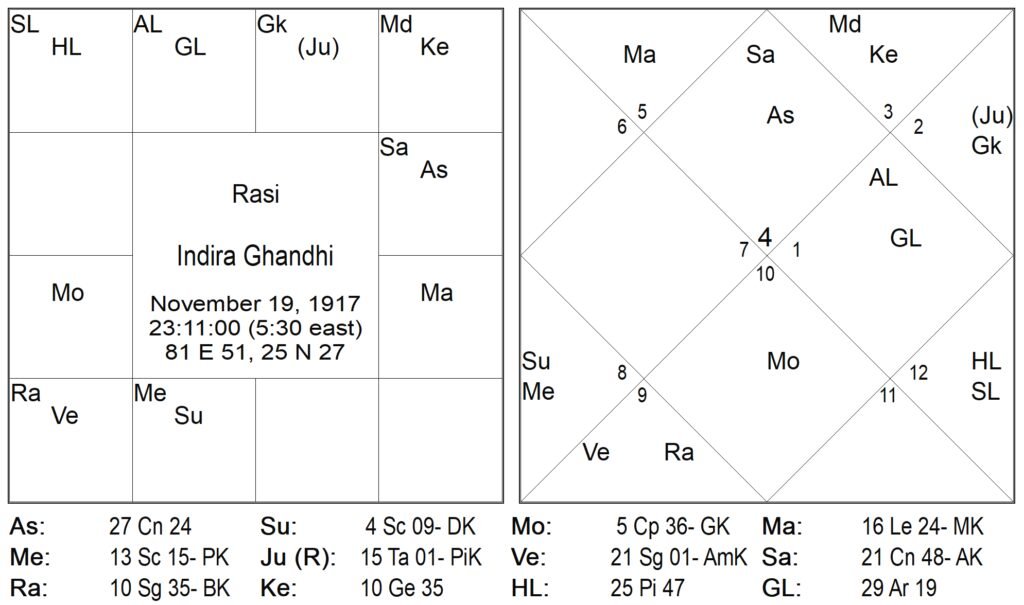
Understanding Saturn-Centric Yogas and the Dynamic Interplay of Planetary Energies
Introduction: The Challenge of Interpreting Multiple Yogas
In every horoscope, hundreds of yogas or planetary combinations may exist simultaneously. For an astrologer, memorizing each yoga along with its outcomes can become overwhelming. As a result, many practitioners rely primarily on widely known classical yogas such as Budh-Aditya Yoga or Gajakesari Yoga.
However, when the foundational concepts of Nadi astrology or Bhrigu-based yogic principles are understood, interpretation becomes more intuitive. Instead of memorization, the astrologer begins to perceive the logic behind planetary interactions. This conceptual clarity allows variations in yoga results to be judged more accurately within the birth chart.
Planetary Relationships: The Core Foundation
A fundamental rule of astrology is that no planet functions in isolation. Every ग्रह (planet) operates in relationship with others through house placements, aspects, and positional geometry.
From a conceptual standpoint:
-
A planet placed 6th from Saturn tends to create professional challenges.
-
Planets in 2nd, 3rd, or 4th from Saturn influence wealth, courage, and emotional stability linked to career.
-
These relative placements form situational yogas that manifest through planetary periods (dasha) or cyclical triggers described in Bhrigu systems.
Thus, rather than viewing yogas as fixed formulas, they are better understood as energetic equations shaped by planetary proximity and interaction.
Saturn as the Karmic Axis of Career Yogas
Saturn is universally regarded as the primary significator (karaka) of karma, profession, endurance, and life responsibilities. Evaluating yogas from Saturn’s reference point often reveals the rise and fall patterns in one’s professional journey.
Key interpretative approaches include:
-
Studying planets in trinal or angular positions from Saturn.
-
Observing afflictions to Saturn during key dashas.
-
Assessing supporting or obstructing yogas formed through conjunctions or exchanges.
Such analysis helps determine whether career growth will occur through discipline, struggle, delay, or structured elevation.
Age Activation and Planetary Cycles
Nadi and Bhrigu traditions often correlate planetary results with age activation cycles. Each planet becomes more prominent at specific life phases.
For example:
-
The Sun placed in the 5th house may activate strongly around the 47th year.
-
Outcomes during that period depend on planetary relationships to the Sun.
If Saturn forms a challenging trinal or aspectual link, the year may deliver mixed karmic outcomes—simultaneous gain and loss.
Illustrative Pattern: Dual Results of a Single Yoga
A well-known interpretative pattern shows how a single placement can produce contrasting events.
When the Sun in the 5th house connects strongly with Saturn:
-
Authority, recognition, or political elevation may occur.
-
Simultaneously, emotional loss or paternal grief may manifest.
This duality illustrates a key Nadi principle: one yoga can deliver multiple parallel results, depending on karmic triggers and planetary associations.
The Zodiac as an Interconnected Mechanism
The zodiac operates like a multi-gear mechanism. Each planetary gear rotates at a different speed through dashas, transits, and age cycles.
Life events occur at intersection points—moments when:
-
Two or more planetary energies synchronize.
-
Yogas become time-activated.
-
Dormant karmic combinations manifest outwardly.
Thus, prediction accuracy improves when astrologers analyze these intersections rather than isolated yogas.
Role of Bhrigu Samhita Framework
Classical Bhrigu literature presents pre-structured horoscopic combinations mapped to time cycles. The objective was to enable direct readings without complex time rectification.
When decoded conceptually, these charts emphasize:
-
Planetary sequencing.
-
House interlinkages.
-
Event timing through relational triggers rather than calculations alone.
This reinforces the idea that astrology is not merely technical but deeply pattern-oriented.
Astrology Keywords Included in this Article
-
Yogas in astrology
-
Nadi astrology principles
-
Bhrigu yogas explained
-
Saturn career astrology
-
Planetary combinations Vedic astrology
-
How to read yogas in horoscope
-
Saturn from planets interpretation
-
Age activation astrology
-
Nadi Jyotish techniques
-
Career prediction Vedic astrology